











According to the 2023 American Community Survey, the median age of construction labor force is 42 years old—one year older than a typical worker in the national labor force. However, the construction industry has seen an increase in younger skilled labor since the peak of the skilled labor shortage in 2021.
Geographic Differences
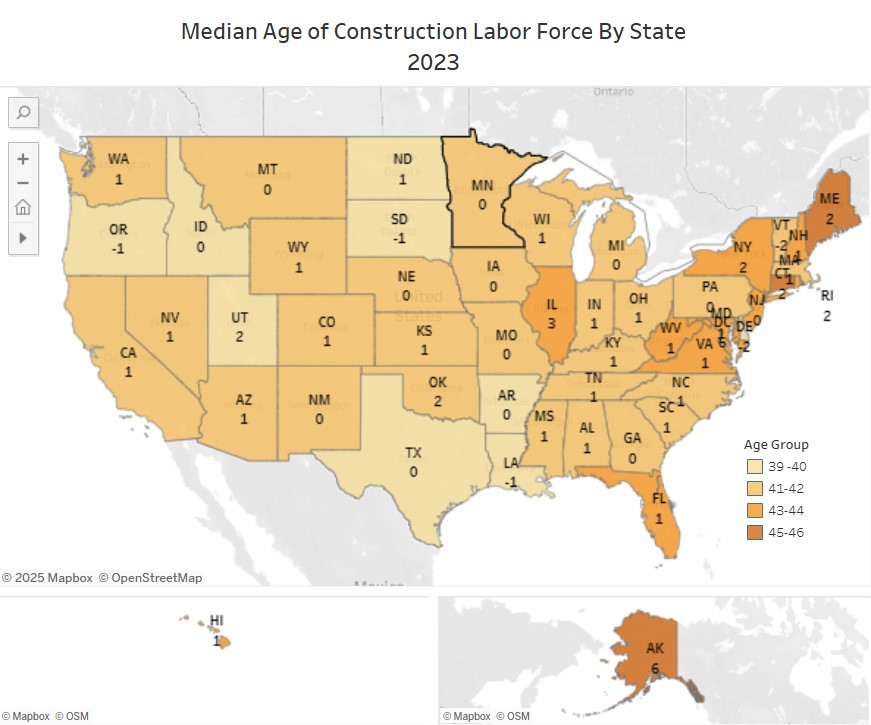
The median age of construction labor force varies from state to state. The states with the highest median ages are:
- Alaska (46 years old),
- Connecticut (45 years old), and
- Maine (45 years old).
In the central part of the country, however, the construction labor force skews younger. For example, half of all construction workers in Utah are younger than 39 years old.
Generational Shifts
The age distribution of construction workers over time shows differences among the generations. According to National Association of Home Builders’ analysis of ACS data, Gen Z (people born between 1997 and 2012) are more likely to enter the construction industry because of factors such as new innovations in modern technology, rising college tuition costs, competitive construction job wages and job security.
Other generational shifts in the construction labor force include:
- Gen Z’s share more than doubled, increasing from 6.4% in 2019 to 14.1% in 2023;
- Millennials’ share rose 2% over the same period;
- Gen X’s share declined from 36.6% to 33.7%; and
- Baby Boomers fell sharply from 20.6% to 14.2% as workers retired.
Although there is a growing pipeline of younger construction workers, Gen Z workers only accounted for 14.1% of construction workers in 2023, while around 71% of the construction labor force were Millennials and Gen X.
With Baby Boomers constituting the last 14.2% of the construction labor force and gearing up for retirement, attracting young skilled labor remains a primary long-term goal for the construction industry.
Principal Economist Na Zhao provides more details in this Eye on Housing post. (Source)