








By CJ Jorgensen for NEVBEX
The Regional Transportation Commission of Southern Nevada is currently working on the 12.5-mile Let’s Go Maryland Parkway project.
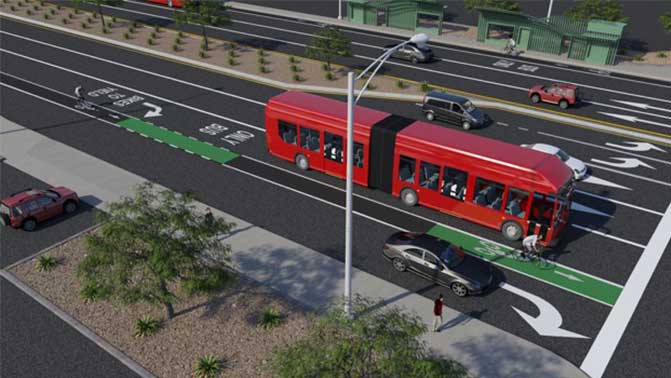
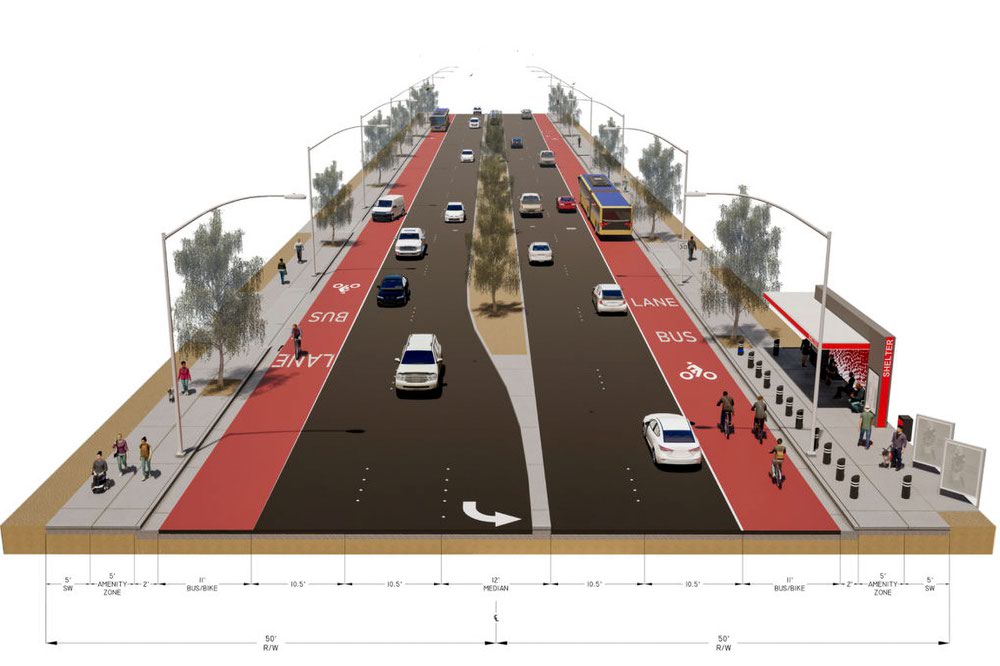
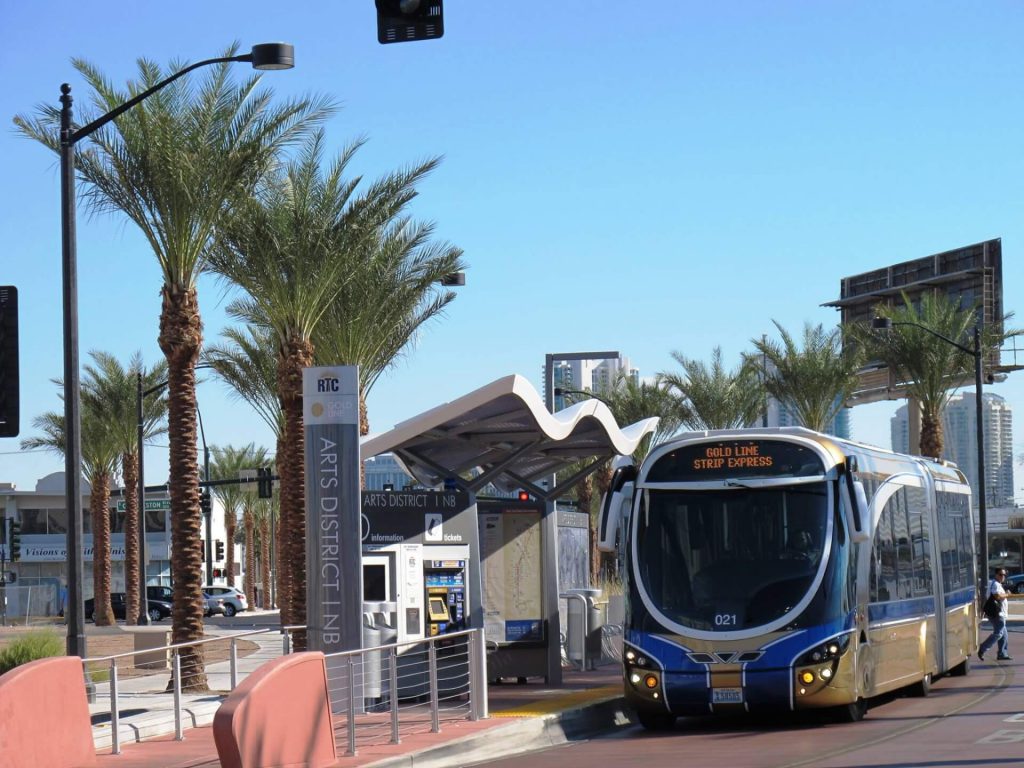
The project is comprised of adding medians to the roads, delegating lanes for buses/bikes and painting those lanes red, sidewalk extensions, 42 new transit shelters, 15 new hydrogen fuel buses and additional shade spots along the route.
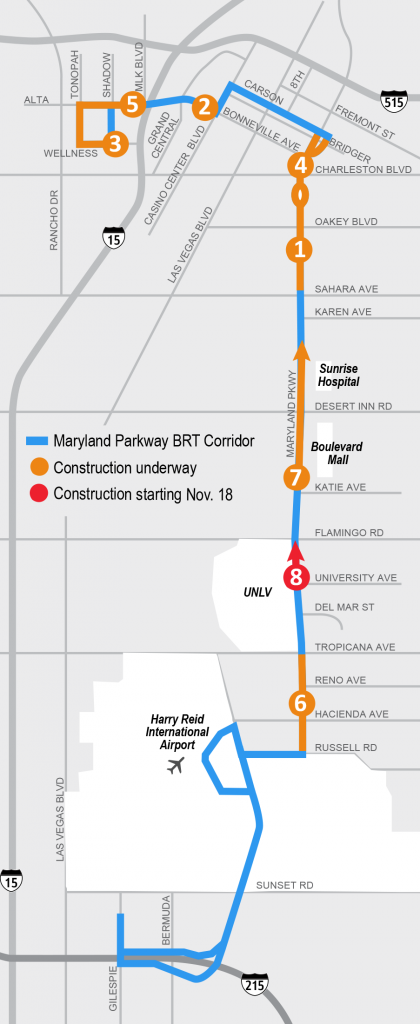
The bus rapid transit system is divided into two segments, one in Las Vegas and the other in Clark County. Construction on the Las Vegas portion of the project began on Aug. 5, while construction on the Clark County portion began on Sept. 23.
This marks the fifth bus rapid transit system that RTC has worked on.
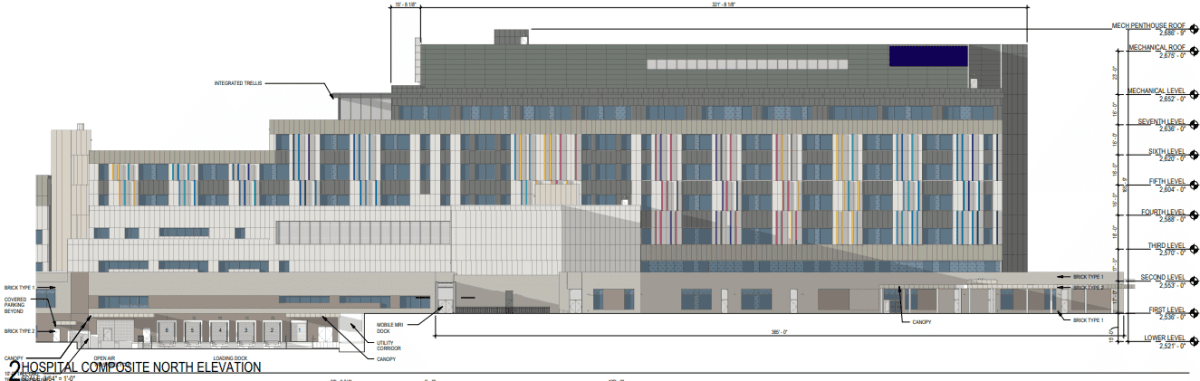
The route extends from the South Strip Transit Terminal in the south, all the way up to the LV Medical District in the north, totaling 23 connections along the way. The route will connect Harry Reid International Airport, Boulevard Mall, the University of Nevada Las Vegas’s main and medical campuses, and Sunrise Hospital.
The project began with a CMAR procurement, but ultimately switched over to a low-bid procurement. Due to the system going through two separate jurisdictions, RTC had to put out a bid for each jurisdiction.
Two separate teams from Las Vegas Paving won the bids; Las Vegas Paving is the general contractor for both portions of the project. The design firm for the project is GCW Engineering. Completion is anticipated for September 30, 2026.
Funding & Costs
Maryland Parkway is one of the largest transit routes in the RTC and has been in the making for more than a decade. The current budget gives the project a ceiling of $378M. Brij Gulati, Director of Capital Projects at RTC, is optimistic that the project will end up costing less than the ceiling.
Earlier this year, the U.S. Department of Transportationprovided the RTC with $149.8M in funding for the project.
Construction costs are approximately $225M. An additional 10% will be set aside for the owner contingency. Right-of-way purchases and the 15 buses are also key players in the overall cost. The real estate acquisition company, AtkinsRéalis, assists RTC in approaching owners for right-of-way purchases.
The 15 buses cost $30M and annual operating costs are projected to be approximately $4M.
Future of Maryland Parkway with New BRT System
Gulati stated that BRT systems are more flexible than fixed-transit systems, such as trains and light rail systems.
The BRT will also bring benefits to residents and local businesses. The project will provide more shaded areas around streets, an increase in pedestrian safety and efficient/alternative methods of transportation for locals and visitors alike.
The project is expected to create 1,100 local jobs and contains $33M in local/small business contracts with subcontractors.
Construction Progress: Challenges and Successes
The corridor is home to approximately 63,000 people, 109,000 jobs, 35,000 vehicles and 9,000 transit riders daily. The Let’s Go Maryland Parkway Website has a weekly-updated tracker to display what work is happening on respective sections of the corridor.
Coordination is one of the biggest challenges RTC has faced. As the bus route enters multiple jurisdictions, RTC must communicate effectively with utility companies, the City of Las Vegas and Clark County.
Gulati stated communication was one of the most important aspects of the project. RTC holds weekly meetings with utility companies, as well as representatives from Las Vegas and Clark County. The project comes with a five-year no-cut agreement, meaning the roads cannot go through traffic-impacting construction for five years.
Gulati stated weekly meetings are held with the companies and municipalities and made it a point to express appreciation for the work the companies and municipalities have put into communication. The construction team meets weekly to discuss updates, coordination efforts, budget and schedule.
Bi-weekly meetings are held virtually with stakeholders in the corridor to provide construction updates. This gives stakeholders an opportunity to coordinate events with ongoing construction activities.