











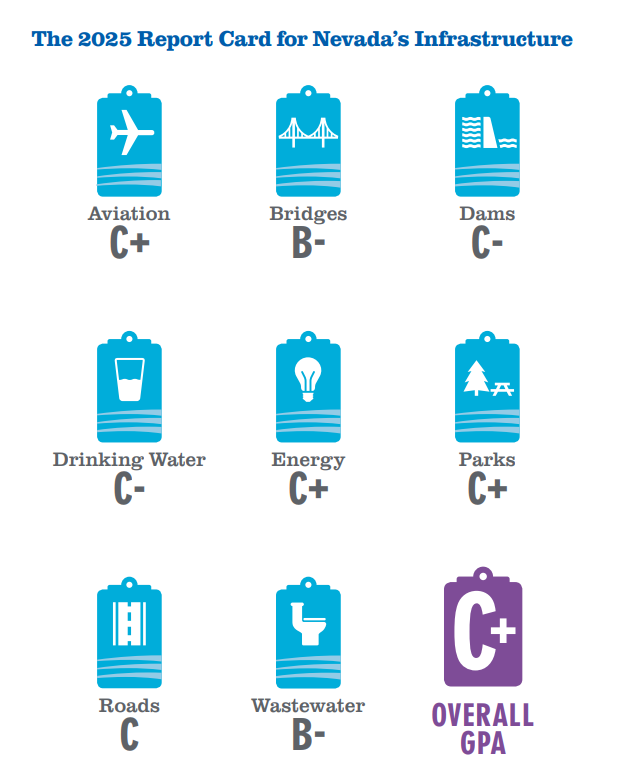
The American Society of Engineers recently unveiled its report card for the Silver State, which shows Nevada improved from a C in 2018 to a C+.
Nevada is primarily growing in two areas: Reno and Las Vegas. ASCE stated 90% of Nevada’s population lives among these two metropolitan areas. Notably, Nevada is the seventh largest state in terms of land mass, but the 32nd largest in terms of population.
Approximately 90% of Nevada is considered rural, with more than 80% of that land being owned by the federal government. Reno, and much of northern Nevada, has rapidly aging infrastructure. Las Vegas, however, has experienced such rapid growth that its infrastructure is comparatively new. Regardless of the differences, both northern and southern Nevada require a plethora of construction and maintenance.
NVBEX previously covered ASCE’s 2025 Comprehensive Assessment of America’s Infrastructure report, which covered infrastructure on a national scale, as well as Nevada’s 2018 report card. The United States most recently received a C. (NVBEX; March 31)
The newest report covers eight distinct categories that are combined to provide the State with an official grade.
The report card considers infrastructure’s capacity, condition, funding, future need, operation/maintenance, public safety, resilience and innovation when providing its grades. Grades are based on a school report card-style model and range from F to A+.
Infrastructure Grades
Aviation
Aviation received an overall grade of C+. Aviation is an incredibly important infrastructure component in Nevada, as State revenues are dependent on tourism. In comparison, the national aviation score was D+. The state is home to 51 system airports and 63 heliports.
More than 60 million passengers used the Reno-Tahoe International Airport and the Harry Reid International Airport in 2024. This placed a heavy strain on the existing infrastructure and required constant maintenance.
In the anticipation of further volume increases, Reid expanded the Henderson Executive Airport and is beginning an environmental analysis for the Southern Nevada Supplemental Airport. (NVBEX; Feb. 14; May 30)
The Reno-Tahoe airport is in the midst of its $1.1B MoreRNO project. (NVBEX; Jan. 10; April 7; May 29) Airports throughout the Silver State received more than $27M in Federal Aviation Administration Airport Improvement Program grants throughout 2024.
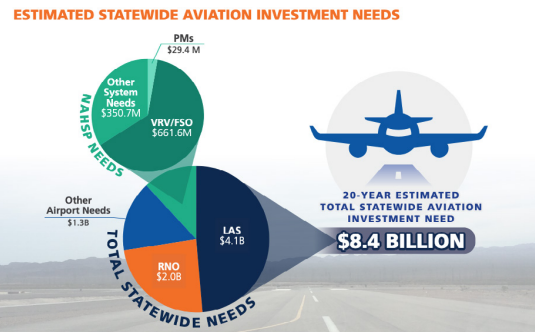
The Nevada Airport and Heliport System Plan, released in 2022, found the State needs $8.4B in aviation investment over the next 20 years.
ASCE recommended Nevada increase its sustainability programs throughout its rural general airports, support autonomous ground vehicles and encourage more funding via legislation.
Bridges
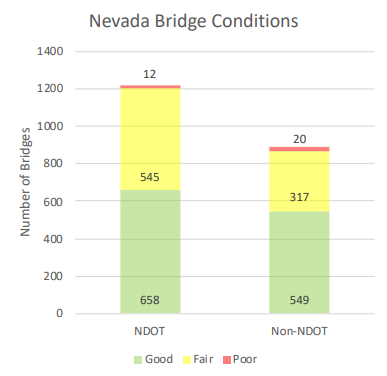
Bridges received an overall grade of B-, while the national average was C. ASCE noted only 1.5% of Nevada’s 2,128 bridges are “structurally deficient.” Furthermore, it went on to laud the state for being home to one of the best bridge networks in the country.
Despite this, 26% of bridges throughout the state are more than 50 years old. An additional 12% will reach the 50-year design life by 2030.
Typically, older bridges are more expensive to maintain and eventually require replacement. On top of this, Nevada does not have sufficient readily available funds to address its future needs.
On average, Nevada spends around $17M every two years on preservation efforts. The $17M stems from federal funding, fuel taxes and registration fees. Nevada is usually able to replace two bridges every year, which ASCE claims is not enough to keep up with the number of bridges approaching old age.
The report card notes Nevada has a $133M backlog on bridge preservation work. The state ranks 43rd in the number of bridges, with slightly more than half of its bridges located in the Las Vegas metropolitan area. Around 75% of bridges in the Silver State received a “good” condition rating, while only 1% were rated “poor.”
ASCE recommended the State of Nevada direct more funding toward bridge maintenance and replacement initiatives throughout the next decade. It also recommended creating a program to secure funding sources for bridge-related projects.
Dams
Dams earned a grade of C-, which is slightly better than the D+ national average. There are 673 state regulated dams in the Silver State. Of these, 508 are registered in the U.S. Army Corps of Engineers’ National Inventory of Dams.
Roughly 94% of dams in the state have an Emergency Action Plan prepared. The NID noted 66% of its dams had either “satisfactory” or “fair” condition assessments. Around 30% of dams were labeled as “poor” or “unsatisfactory.”
Nevada’s safety budget for high hazard potential dams is roughly half the national average. The State also has roughly half the number of agency employees for every high-hazard dam.
Private companies own the largest number of dams throughout the state, followed by local governments. More than half of Nevada’s dams are used for irrigation and flood control. Typically, these are earthen dams.
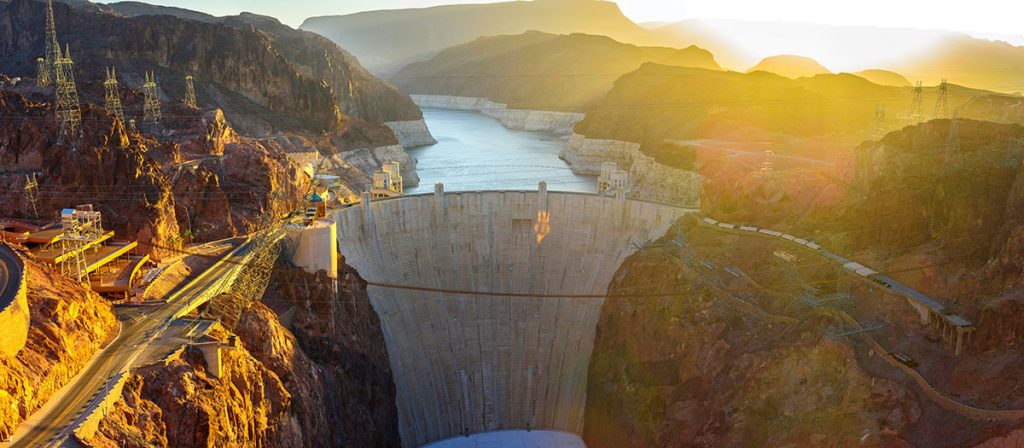
The majority of the Silver State’s dams were constructed after 1950. These dams typically have design lives ranging from 50 to 100 years.
ASCE anticipates Nevada will need to spend more than $80M by 2029 to repair and maintain its dams to a satisfactory degree. The State has an annual budget of $350K.
ASCE recommended Nevada improve the availability of public knowledge surrounding the risks associated with aging dams. Furthermore, it recommended the State clearly note the objectives of its dam safety program. It went on to recommend the creation of State grants for repairs, reallocating storage fees to its safety program, increased funding, expanded staffing and prioritizing infrastructure with a “poor” condition assessment.
Drinking Water
Drinking Water was given the same grade in Nevada as it was on a national scale: C-. Nevada is the driest state in the country and is reliant on innovative water systems to maintain its supply.
The report card noted Nevada has some of the most effective water conservation measures in the country. It cautions, however, that Nevada’s rapidly growing population could cause further strains on a limited water supply.
The Environmental Protection Agency’s 7th Drinking Water Infrastructure Needs Survey and Assessment found the State will need $6.4B in funding to provide adequate water system improvements across the next two decades. Two-thirds of this funding will be required for distribution/transmission projects.
The drinking water system is comprised of 194 public water systems, 242 non-community public water systems and 158 transient water systems. Around 97% of the population relies on community drinking water systems.
Drinking water is split amongst three regions: Southern Nevada, Northern Nevada and rural Nevada. Southern Nevada, which includes the Las Vegas metropolitan area, is mostly served by the Southern Nevada Water Authority. SNWA was created in 1991 and has seven member agencies: Big Bend Water District, Boulder City, Clark County Water Reclamation, City of Henderson, City of Las Vegas, Las Vegas Valley Water District and City of North Las Vegas. These agencies serve more than two million people.
Drinking water is sourced from the Colorado River and then treated and distributed via the Alfred Merritt Smith Water Treatment Facility and the River Mountains Water Treatment Plant.
Notably, the system also includes groundwater wells to supplement the water supply.
Northern Nevada is centered around the Reno metropolitan area and is served by the Truckee Meadows Water Authority. The system sources water from the Truckee River and groundwater wells. TMWA has two water treatment plants: the Chalk Bluff Water Treatment Plant and the Glendale Water Treatment Plant. The water system serves around 440,000 people.
The rural Nevada water system is comprised of various systems outside of the SNWA and TMWA service areas. These systems are estimated to serve more than 600,000 people. Each system serves a small chunk of the population.
Generally, the systems struggle to find qualified personnel to operate the systems. The Nevada Division of Environmental Protection Bureau of Safe Drinking Water released a noncompliance report in April 2023 that noted 17 public water systems were out of primary drinking water standards compliance, and an additional 13 were out of compliance with secondary drinking water standards.
These systems generally source water from groundwater wells. They also struggle to fully treat their water supplies. Many of the rural systems are comprised of aging materials.
ASCE recommended the State continue to implement conservation efforts to sustain its water supply, continue to innovate its infrastructure to be more likely to receive funding, and address the drinking water standards in its rural communities.
Energy
Energy infrastructure in Nevada greatly surpassed the national average. The Silver State was awarded a C+ grade, while the national average is D+.
While Nevada is able to meet the energy needs of its population, it is highly dependent on external resources. Notably, the State still releases a substantial amount of greenhouse gas emissions; however, emissions are continuing to decline as time moves forward.
NV Energy generates, transmits and distributes around 90% of energy in the Silver State. Both NV Energy and Southwest Gas supply natural gas to consumers.
The State recently adopted a Renewable Portfolio Standard to encourage renewable energy. This program will likely be unable to reach its goal of net-zero emissions by 2050.
Nevada has a strong solar power generation industry that is rapidly expanding. Furthermore, the Silver State is home to the highest capacity of installed geothermal power in the nation.
In 2020, U.S. Energy Information Administration noted 32% of energy in the state is used for transportation, 22% is used for industrial purposes, 26% for residential and 20% for commercial. Nevada also uses around six times more energy than it produces on an annual basis.
Around 63% of energy comes from natural gas, most of which is transferred via pipeline from outside the state. Renewable energy makes up roughly 31% of electricity generation in Nevada. The major contributors are solar, geothermal and hydroelectric. The last 5% stems from imported coal power, but the last coal-fired power plant in the state is to be shut down this year.
Renewable energy production has more than tripled since 2011. Notably, Nevada is also the only domestic producer of lithium for rechargeable batteries.
As power generation infrastructure increases, so does the need for transmission lines. The One Nevada Transmission Line, in partnership with LS Power and DesertLink,is a crucial piece of infrastructure to connect both northern and southern Nevada. Other planned transmission lines include the Greenlink Nevada Transmission Project, the Transcanyon CrossTie Transmission Line Project and the TransWest Express DC line.
ASCE recommended the Silver State continue to wean itself away from fossil fuels, continue to work with land managers on renewable energy, expand its benefits programs, improve transparency surrounding renewable energy and streamline the permitting process.
Furthermore, ASCE went on to recommend incentivizing energy conservation, educating the public on renewable energy, creating more sustainable programs, working on exceeding emissions metrics and developing a plan to reduce transportation-related emissions.
Parks
Parks in Nevada received a C+, while the national average was a C-.
The state has the largest quantity of both total and percentage of publicly owned parks. Despite Nevada’s growing population, the per capita ratio of public parks is more than 18 acres/person.
“Adventure tourism” has called for an increase in demand for Nevada’s parks. Park managers are becoming increasingly strained as inflation continues to rise above the budget and climate conditions continue to worsen.
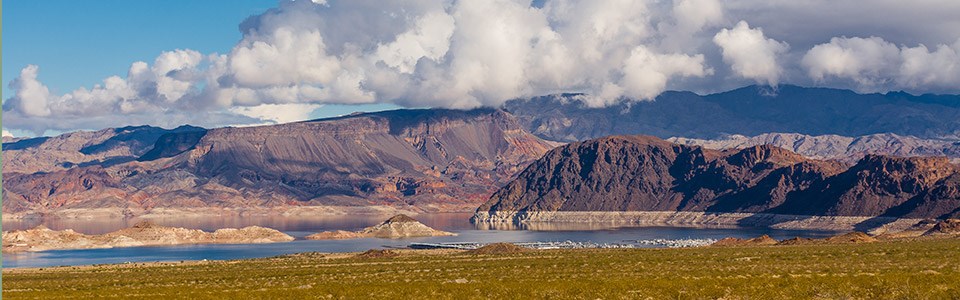
Funding continues to be one of the primary issues with rehabilitating Nevada’s existing parks. The conditions and maintenance requirements of parks throughout the Silver State vary. For example, the Lake Mead National Recreation Area has a deferred maintenance backlog of $580M. These maintenance issues are further exacerbated by the rapidly changing water levels in the lake.
The Red Rock National Conservation Area is but a fraction of the size and is able to operate in surplus. The park consistently upgrades its amenities and facilities.
Fortunately, Nevada has multiple programs to generate revenue for its public parklands. For example, the Southern Nevada Public Lands Management Act was created to use proceeds from selling Bureau of Land Management land to fund conservation efforts and public projects.
ASCE recommended the State ensure its existing facilities receive enough funding to provide for maintenance and various other improvements.
It also recommended the creation of an asset management plan to streamline allocations, the pursuit of various other funding methods, providing higher salaries and better benefits to park staff, seeking innovative infrastructure improvements, and the use of data analytics to further optimize park improvements.
Roads
Roads in Nevada also received a higher grade than the national average; having received a C compared to the average D+.
Nevada has more than 48,000 miles of roadway. The U.S. Department of Transportation noted the condition of roads is primarily “good” to “fair.” Furthermore, driving on deteriorating roads costs residents around $1.2B annually.
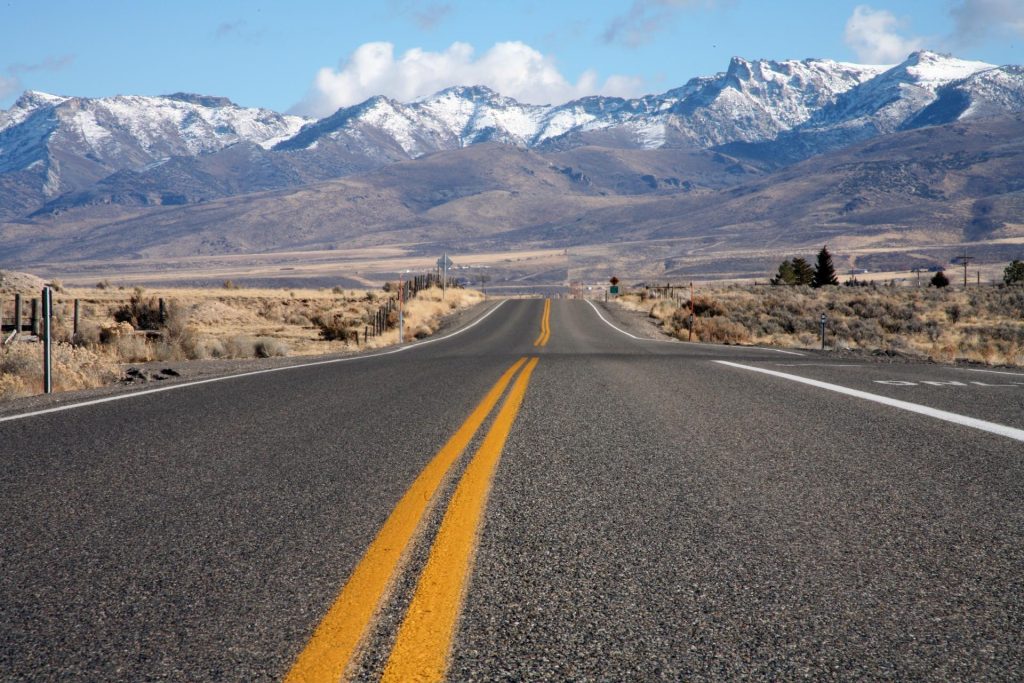
The Infrastructure Investment and Jobs Act provided $2.8B for highway and bridge investments from 2021 to 2026. Federal funding supports roughly 55% of transportation spending on highway and bridge improvements.
The Federal Highway Administration’s National Highway Construction Cost Index notes the State will need to consider funding alternatives as electric vehicle use continues. Current funding is highly dependent on revenues derived from fuel taxes. Transportation safety is also a large issue plaguing Nevada.
The report estimated the Nevada Department of Transportation is in need of at least $16.9B in funding over the next 10 years to maintain its roadways. State and federal funding is expected to provide around $10.7B in funding, creating a projected gap of more than $6B.
ASCE recommended Nevada implement new long-term funding sources, increase its road safety via research, invest in transportation improvements throughout the state, further innovate its traffic management system, evaluate high-capacity transportation options, invest in pedestrian-friendly infrastructure and further implement sustainable roadways.
Wastewater
Wastewater’s B+ far exceeded the national average of D+. The Silver State is home to around 6,775 miles of sewer pipeline that connects to 50 different wastewater treatment plants.
The majority of wastewater facilities in the state serve rural populations. Much of Nevada’s wastewater infrastructure is relatively new, as it has had to keep up with the population growth.
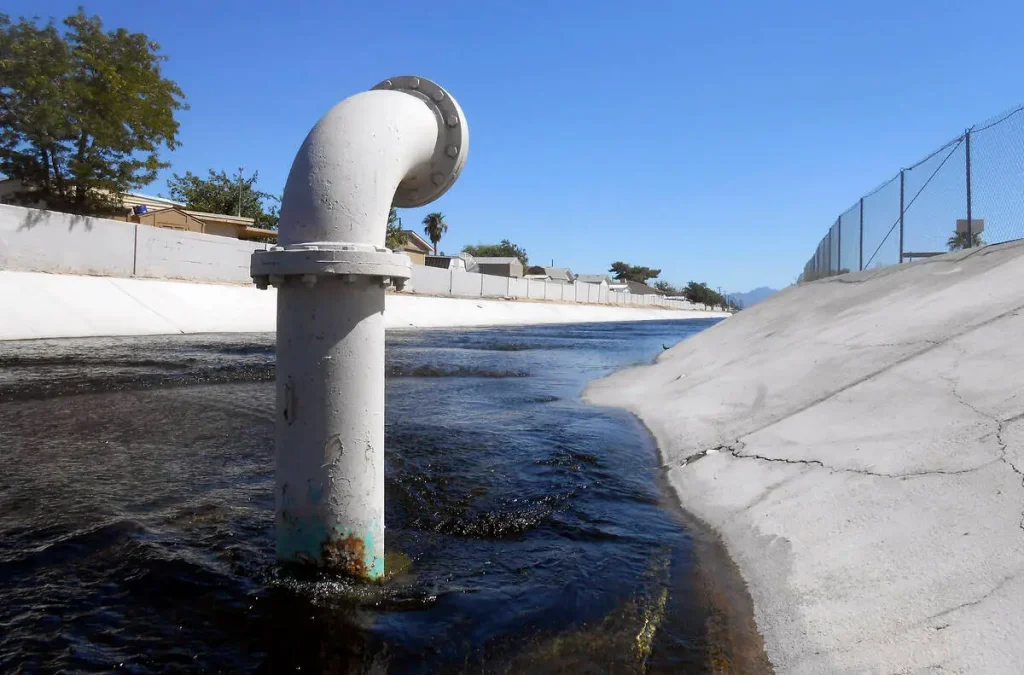
The report noted that the number of treatment facilities throughout the state will likely not change much as the population continues to skyrocket. Wastewater facilities in Nevada’s urban areas have developed plans to continue to meet the needs of the local population.
ASCE said Nevada’s focus should be to maintain and rehabilitate its existing wastewater infrastructure. Many agencies have participated in life-extending rehabilitation efforts, such as re-lining existing pipelines.
ASCE recommended the State continue to find low-interest loans, increase the volume of treated wastewater to establish more return flow credits, continue to explore partnerships to recover wastewater resources, establish an infrastructure needs assessment, continue to research new technologies, ensure compliance, and coordinate funding opportunities.