











CBRE has released the results of its 2026 U.S. Industrial & Logistics Occupier Survey, which shows industrial space in the U.S. is not experiencing a slowdown in demand.
Nearly 90% of industrial occupiers plan to maintain or expand their real estate footprints in 2026. Approximately 23% of those are looking to upgrade to new facilities, while 17% want to explore cost savings. Most of those planning to expand are looking at the Southeast, and reliance on Third-Party Logistics providers is growing.
Occupiers remain cautious but lean toward optimism. Caution stems primarily from ongoing high costs, but changes to national trade policies have only generated moderate operational impacts, and there is a strong preference for new and top-quality facilities even though rents are higher.
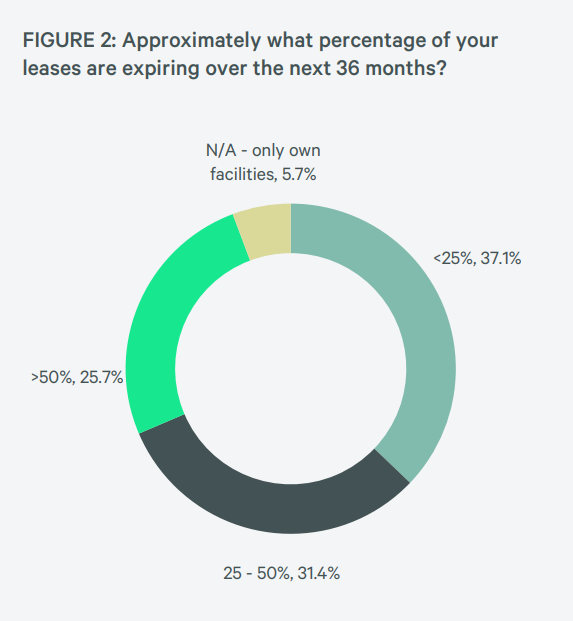
Slightly more than two-thirds of occupants said more than 25% of their total leases will expire in the next 36 months, which could total around 1.6BSF. This can be expected to kick off a significant renegotiation cycle, which could see owners pushed to provide more concessions.
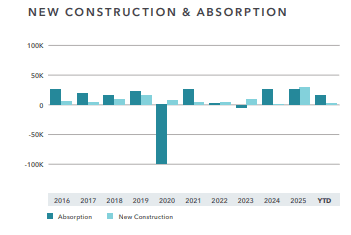
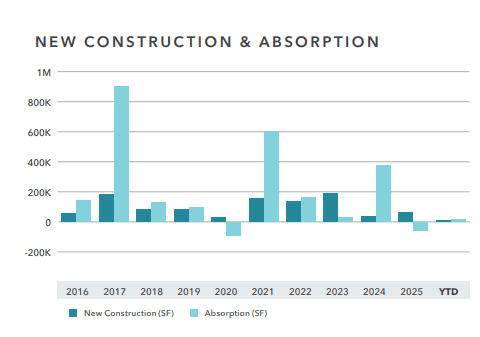
Facilities built before 2020 can expect to see ongoing consolidation. The segment saw more than 4MSF of negative net absorption over the last three years.
3PL providers are the most active sector for bulk leases larger than 100KSF, holding a market share of 36% in 2025. More than 32% of respondents plan to increase their use of 3PLs in the next three years.
The Southeast led in terms of occupiers looking to expand, accounting for 30.4% of respondents who answered yes. The Northwest and Northeast tied for the lowest expansion interest at 8.7%, while the Southwest was at the low end of the middle with 13.0%.
On the Manufacturing side of Industrial, 50% of companies with U.S. manufacturing operations said they plan to expand in the next three years.
Despite the general public narrative, 41% of respondents said “protecting domestic inventory to serve American consumers, rather than avoiding tariffs, is the major reason for expanding their U.S. manufacturing operations.”
Shorter production times were listed as the major reason by 29%, while only 6% claimed avoiding tariffs.
Key challenges faced by respondents included:
- High occupancy-related costs,
- Increasing supply-chain-related costs,
- Increasing rents,
- Labor availability and
- Space availability.
The full report is available for download here.